Mental Health and Longevity: Why a Healthy Mind May Be One of the Most Important Factors in Living Longer
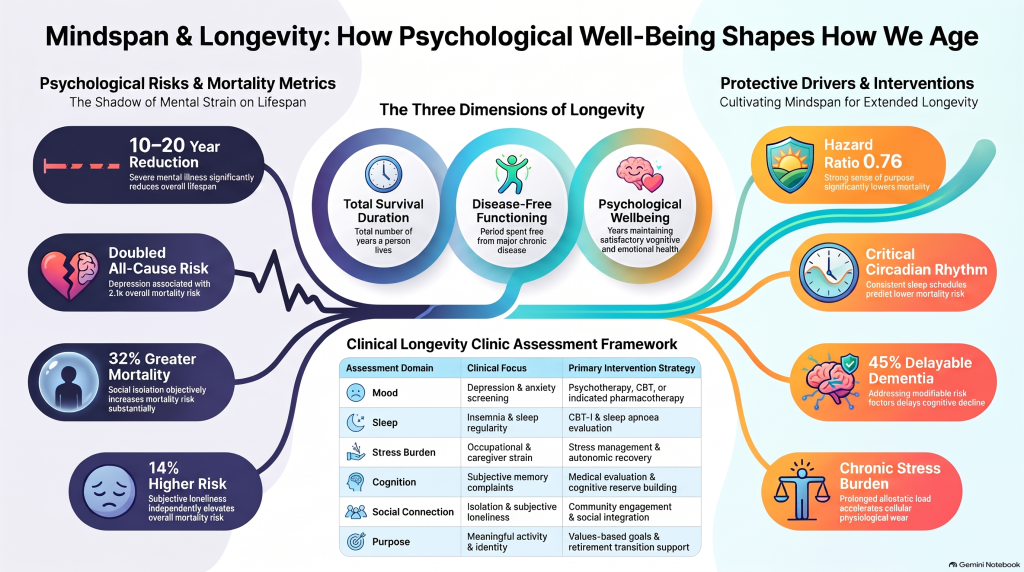 The science of ageing is changing. Beyond exercise, nutrition, and medical treatment, psychological well-being is emerging as an important component of a longer and healthier life.
Introduction: Are We Living Longer, or Simply Surviving Longer?
Modern medicine has achieved something remarkable. Infectious diseases that once killed millions are treatable, cardiovascular treatments have improved substantially, and cancer survival continues to improve.
As a result, more people are reaching their seventies, eighties, and nineties.
But there is an important question that longevity medicine must address:
What is the value of living another twenty years if those years are dominated by depression, loneliness, cognitive decline, or loss of independence?
For decades, the medical approach to longevity has concentrated predominantly on the physical body. We measure cholesterol, blood pressure, blood sugar, body weight, and increasingly sophisticated biomarkers of biological ageing.
Yet we often pay relatively little attention to psychological well-being.
A person may have excellent cholesterol levels but suffer from untreated depression. Another may exercise regularly while experiencing chronic loneliness. Someone else may have well-controlled diabetes but struggle with anxiety, insomnia, or a persistent loss of purpose.
These problems are not merely emotional inconveniences. They can influence physical health, everyday behaviour, relationships, and ultimately the quality and duration of life.
The emerging scientific perspective is that mental health is not simply a consequence of ageing. It is also one of the factors that shape how we age.
1. Understanding Longevity: Lifespan, Healthspan, and Mindspan
Before examining the evidence, it is useful to distinguish three concepts.
Lifespan refers to the total number of years a person lives.
Healthspan refers to the period during which a person remains relatively free from major disease, disability, and loss of function.
Mindspan is a useful conceptual term for the years during which a person retains satisfactory emotional health, cognitive abilities, psychological engagement, and a sense of identity. Unlike lifespan and healthspan, it is not yet a standardised scientific measurement.
Consider two people who both live to the age of 85.
The first develops depression at 60, gradually becomes socially withdrawn, stops exercising, and experiences increasing disability and cognitive difficulties.
The second maintains meaningful relationships, receives timely treatment for medical and psychiatric conditions, remains physically active, and continues participating in activities that provide satisfaction.
Both have identical lifespans. Their experiences of ageing, however, are profoundly different.
This illustrates why successful longevity should not be defined by survival alone.
It should encompass physical functioning, cognition, emotional well-being, relationships, autonomy, and dignity.
2. Mental Illness and Premature Mortality: What Does the Evidence Show?
One of the strongest reasons to integrate psychiatry into longevity medicine is the established relationship between mental disorders and premature mortality.
The World Health Organization reports that people living with severe mental disorders, including schizophrenia, bipolar disorder, and severe depression, die approximately 10–20 years earlier than the general population.
Importantly, this difference is not explained by suicide alone.
A substantial proportion of premature deaths occurs because of physical conditions such as cardiovascular disease, diabetes, respiratory disease, and other preventable or treatable illnesses.
Several factors contribute:
- Higher rates of smoking and substance use.
- Sedentary lifestyles and unhealthy dietary patterns.
- Metabolic adverse effects associated with some psychiatric medications.
- Reduced access to timely physical healthcare.
- Delayed diagnosis of medical conditions.
- Poverty, stigma, discrimination, and social disadvantage.
- Difficulties maintaining treatment and preventive healthcare.
This reveals a major limitation in the conventional separation between psychiatric and medical services.
A patient receiving excellent treatment for schizophrenia may still develop undetected hypertension or diabetes. Similarly, a patient receiving cardiac treatment may have untreated depression that compromises rehabilitation and medication adherence.
Treating mental illness without addressing physical health is incomplete healthcare.
Depression and mortality
A major systematic review and meta-analysis published in World Psychiatry in 2025 examined 268 studies involving more than 10 million individuals with depression.
Compared with individuals without depression or general population controls, depression was associated with approximately twice the risk of all-cause mortality (relative risk 2.10).
The increase was observed not only in suicide-related mortality but also in deaths from natural causes.
When individuals were compared with others who had similar medical comorbidities, the excess risk was considerably smaller, although still present.
These findings suggest that depression and physical illness are closely interconnected.
However, an important qualification is necessary. These studies are largely observational. They establish an association but cannot prove that depression itself independently causes every component of the observed increase in mortality.
Nevertheless, they provide a strong clinical argument for identifying and treating depression rather than considering it a secondary concern.
3. Can Chronic Psychological Stress Accelerate Biological Ageing?
The human stress response is fundamentally protective.
When we encounter danger, the brain activates physiological systems that help us respond. Heart rate increases, attention becomes more focused, and stress hormones mobilise energy.
These responses are adaptive when they occur temporarily.
The problem begins when the body remains repeatedly or persistently activated without sufficient recovery.
A person experiencing years of workplace pressure, financial insecurity, traumatic stress, chronic caregiving responsibilities, or unresolved psychological distress may experience prolonged changes in stress-regulatory systems.
Researchers describe the cumulative physiological burden associated with repeated adaptation as allostatic load.
The HPA axis
The hypothalamic–pituitary–adrenal axis is an important regulator of stress physiology.
Under stressful conditions, the hypothalamus releases corticotropin-releasing hormone, stimulating pituitary ACTH secretion and subsequently cortisol production by the adrenal glands.
Cortisol plays important roles in metabolism, immunity, and adaptation.
However, chronic stress can be associated with dysregulation of normal cortisol rhythms and altered physiological responses.
Potential consequences include impaired sleep, changes in glucose regulation, abdominal fat accumulation, and altered immune function.
The relationship is not as simple as stress always causing high cortisol. Different psychiatric conditions and stages of prolonged stress may produce different hormonal patterns.
Autonomic nervous system
Chronic psychological distress can also influence autonomic regulation.
Increased sympathetic activation and reduced parasympathetic flexibility may contribute to elevated blood pressure, palpitations, altered cardiovascular responses, and difficulties recovering from stress.
Heart rate variability, or HRV, is one way researchers study cardiac autonomic regulation.
Lower HRV has been associated with several adverse health states, although HRV is influenced by age, medication, fitness, sleep, respiration, and medical illness.
Therefore, it should not be interpreted as a standalone measure of biological age or longevity.
Inflammation and oxidative stress
Research also connects chronic psychological distress with inflammatory and oxidative pathways.
Changes in inflammatory mediators, immune regulation, and mitochondrial functioning may contribute to the relationship between stress and chronic disease.
However, these pathways are complex, bidirectional, and strongly influenced by physical health and socioeconomic conditions.
The most defensible conclusion is that prolonged psychological adversity may contribute to physiological dysregulation, rather than that every stressful experience directly accelerates ageing.
4. Depression, Loneliness, and Epigenetic Ageing
One of the most interesting developments in longevity research concerns epigenetic clocks.
Chronological age measures the number of years since birth.
Biological ageing measures attempt to estimate how ageing-related changes are progressing within the body.
Some researchers use patterns of DNA methylation to construct epigenetic clocks, including measures such as PhenoAge, GrimAge, and DunedinPACE.
A systematic review and meta-analysis published in 2026 examined 22 studies investigating psychological adversity and epigenetic ageing.
The researchers found that loneliness, depression, and psychological stress were each associated with modest increases in epigenetic age acceleration, particularly when measured using certain second-generation clocks.
This suggests a possible biological connection between psychological experiences and ageing-related molecular changes.
But the findings require caution.
First, epigenetic clocks differ in what they measure.
Second, the associations were generally modest and varied across studies.
Third, a person’s epigenetic age is not a precise prediction of their date of death.
Finally, there is insufficient evidence that treating depression or reducing stress reliably reverses clinically meaningful biological ageing.
The scientific implications remain important, but these tests should not yet be marketed as definitive measures of how much psychological treatment has extended an individual’s lifespan.
Mental health may influence biological ageing, but a change in an ageing biomarker is not equivalent to adding years to life.
5. Loneliness: The Overlooked Longevity Risk Factor
Human beings are social organisms.
Our relationships influence emotional security, practical support, behaviour, and access to care.
Social connection can also become especially important during illness, disability, and the later stages of life.
A 2023 meta-analysis published in Nature Human Behaviour examined 90 prospective cohort studies involving more than two million participants.
Social isolation was associated with a 32% higher risk of all-cause mortality, while loneliness was associated with a 14% higher risk.
These two concepts are different.
Social isolation refers to an objectively limited number of social contacts or interactions.
Loneliness refers to the subjective experience of insufficient or unsatisfying connection.
A person can live alone without feeling lonely. Conversely, someone surrounded by family and colleagues may experience profound loneliness.
In 2025, the World Health Organization’s Commission on Social Connection highlighted loneliness as a major global public-health concern, estimating that it was associated with approximately 871,000 deaths annually during the period examined.
Why might social connection matter?
Several mechanisms have been proposed.
People with supportive relationships may receive encouragement to exercise, attend medical appointments, follow treatment recommendations, and seek help when symptoms arise.
Relationships also provide emotional regulation, companionship, assistance during illness, and opportunities for meaningful engagement.
On the other hand, chronic loneliness may coexist with depression, sleep disturbance, reduced activity, and poorer physical health.
Social isolation can become particularly relevant after retirement, bereavement, physical disability, migration, or the death of a spouse.
For older adults, the absence of meaningful social interaction may also reduce cognitive stimulation and opportunities to maintain daily functioning.
The practical implication is significant.
Longevity clinics routinely ask about diet and exercise. They should also ask whether patients have meaningful relationships and someone they can depend upon during illness.
6. Purpose in Life: Can Having Something to Live For Influence Survival?
One of the most compelling areas of longevity research concerns purpose in life.
Purpose refers to the experience of having direction, meaning, and personally valued goals.
It does not necessarily mean ambition, professional success, productivity, or financial achievement.
For one individual, purpose may involve raising children. For another, it may involve teaching, volunteering, caring for a spouse, gardening, artistic expression, spirituality, or contributing to the community.
A 2026 meta-analysis published in Psychological Medicine included 488,765 participants across 25 samples, with follow-up extending up to 32 years.
Higher purpose in life was associated with lower mortality, with a pooled hazard ratio of 0.76.
The association weakened but remained statistically significant after accounting for behavioural and clinical risk factors.
The researchers also found that purpose remained associated with mortality after adjustment for depressive symptoms.
These results suggest that purpose may reflect something more than simply the absence of depression.
How could purpose influence health?
People with a stronger sense of purpose may be more likely to engage in behaviours that protect health.
They may maintain routines, remain physically active, avoid certain harmful habits, pursue preventive healthcare, and remain socially engaged.
Purpose may also help individuals adapt psychologically to illness, disability, and life transitions.
However, observational studies cannot determine whether purpose itself extends life or whether healthier individuals are more likely to experience purpose.
The relationship probably operates in both directions.
Retirement and loss of identity
This becomes especially relevant in older adults.
Many people spend decades building identities around work, professional roles, or family responsibilities.
Retirement can sometimes remove structures that previously supplied routine, social interaction, and meaning.
A person who has spent forty years identifying as a teacher, physician, engineer, or businessperson may struggle when that role suddenly disappears.
Healthy ageing therefore involves more than accumulating financial resources for retirement.
It also requires developing meaningful roles and relationships beyond employment.
Financial preparation may support retirement, but psychological preparation determines much of how retirement is experienced.
7. Sleep: The Bridge Between Mental Health and Physical Longevity
Sleep is another major connection between psychiatric health and longevity.
During sleep, the brain and body undergo processes involved in memory consolidation, emotional regulation, metabolic control, immune function, and physiological recovery.
Chronic sleep disturbance can affect nearly every aspect of health.
Insomnia is associated with depression and anxiety, while psychiatric disorders themselves can disturb sleep.
Sleep-related breathing disorders, especially obstructive sleep apnoea, can contribute to cardiovascular and metabolic problems.
Circadian rhythm disruption may influence hormonal regulation, alertness, and metabolic health.
Does regular sleep matter as much as duration?
A prospective UK Biobank study involving approximately 61,000 participants found that greater sleep regularity was associated with lower all-cause and cause-specific mortality.
The findings suggest that maintaining reasonably consistent sleep–wake patterns may be important alongside obtaining adequate sleep duration.
However, observational findings do not establish that changing sleep regularity alone will produce the same reduction in mortality.
Sleep as a psychiatric intervention
Sleep deserves more attention in routine psychiatric and preventive healthcare.
For patients with chronic insomnia, cognitive behavioural therapy for insomnia (CBT-I) is an established first-line treatment.
Patients should also be evaluated for sleep apnoea, restless legs syndrome, circadian rhythm disorders, medication effects, and psychiatric conditions affecting sleep.
A comprehensive longevity consultation should therefore include sleep assessment, not merely a recommendation to sleep eight hours.
8. Cognitive Longevity: Living Longer Without Losing Independence
For many people, the greatest fear associated with old age is not death itself.
It is the possibility of losing memory, judgement, autonomy, and the ability to recognise loved ones.
This makes cognitive health a central component of longevity medicine.
The 2024 Lancet Commission on dementia prevention identified 14 potentially modifiable risk factors, including depression, social isolation, physical inactivity, hearing loss, hypertension, diabetes, smoking, and elevated LDL cholesterol.
The Commission estimated that addressing these factors could potentially prevent or delay approximately 45% of dementia cases at a population level.
The World Health Organization’s updated 2026 dementia risk-reduction guidelines similarly emphasise a life-course approach involving physical activity, healthier lifestyles, cardiometabolic risk management, and social and cognitive engagement.
These figures should not be interpreted as a guarantee that any individual can prevent dementia by eliminating particular risk factors.
Depression and dementia: A complex relationship
Depression is associated with increased dementia risk.
Several explanations are possible.
Longstanding depression may influence cognitive health through vascular, inflammatory, behavioural, and other pathways.
However, depression can also occur as an early manifestation of a developing neurodegenerative condition.
Both possibilities may operate simultaneously.
Consequently, late-onset depression accompanied by progressive cognitive complaints should prompt careful assessment rather than being dismissed as ordinary ageing.
Equally, treating depression can improve concentration, motivation, sleep, and everyday cognitive performance, even when it does not alter the underlying risk of dementia.
Cognitive reserve
Another relevant concept is cognitive reserve.
Individuals differ in their ability to maintain cognitive functioning despite age-related or disease-related changes in the brain.
Education, intellectually engaging activities, social interaction, and occupational complexity have been associated with differences in cognitive outcomes.
The practical message is that mental engagement remains important throughout adulthood.
Learning a language, reading, playing music, maintaining hobbies, participating in discussions, and learning new skills may contribute to a cognitively active lifestyle.
However, no particular brain-training application has been proven to prevent Alzheimer’s disease.
9. Psychological Resilience: Does Coping Better Mean Ageing Better?
Resilience refers to the ability to adapt and recover when facing adversity.
Resilience does not mean never becoming sad, anxious, or distressed.
A psychologically resilient person can experience grief, fear, disappointment, and emotional pain.
What matters is the capacity to respond flexibly, seek support, regulate emotions, and gradually regain functioning.
This becomes especially important with increasing age because many life transitions cannot be avoided.
Illness, retirement, bereavement, declining physical capacity, and changing family relationships are common challenges.
Psychological flexibility
Psychological flexibility refers to the ability to adapt behaviour in response to changing circumstances while remaining connected to personally meaningful values.
For example, a former marathon runner who develops arthritis may no longer be capable of running long distances.
An inflexible response might involve abandoning physical activity altogether because running was central to their identity.
A more flexible response may involve swimming, walking, cycling, or another form of movement.
The original activity changes, but the value of maintaining physical health remains.
Interventions such as cognitive behavioural therapy, acceptance and commitment therapy, and other evidence-based psychological treatments can help people manage distress and improve functioning.
Their benefits for emotional health are established in appropriate clinical settings. Direct evidence that these interventions extend lifespan is still limited.
Psychological flexibility may therefore be a valuable healthspan goal without needing to be presented as a proven anti-ageing treatment.
10. Mental Health, Diabetes, Obesity, and Cardiovascular Disease
Some of the most clinically important relationships between psychiatry and longevity occur through chronic physical diseases.
Consider diabetes.
Successful diabetes management requires repeated daily decisions about medication, food, physical activity, monitoring, and healthcare attendance.
Depression can reduce motivation and make these decisions more difficult.
Anxiety may contribute to avoidance of investigations, fear of complications, or excessive preoccupation with glucose readings.
Diabetes-related emotional distress can produce exhaustion and disengagement from self-management.
Similar relationships occur in hypertension, obesity, and cardiovascular disease.
The behavioural pathway
Psychological health influences our ability to maintain healthy behaviours over many years.
A person who is severely depressed may understand the importance of physical activity yet remain unable to initiate it.
Someone with chronic anxiety may rely on alcohol or tobacco for temporary relief.
An individual with untreated sleep apnoea may struggle with daytime fatigue, overeating, and reduced activity.
These behaviours can subsequently affect cardiovascular and metabolic risk.
The biological pathway
Mental distress can also interact with autonomic, endocrine, metabolic, and inflammatory regulation.
However, these relationships are not one-directional.
Cardiovascular illness itself may lead to depression. Diabetes complications may increase anxiety. Chronic pain may disrupt sleep and contribute to emotional distress.
This creates a reinforcing cycle in which mental and physical illness influence one another.
The European Society of Cardiology’s 2025 clinical consensus statement on mental health and cardiovascular disease supports more integrated psychological and cardiovascular care.
The implications are straightforward.
A patient with uncontrolled depression and hypertension requires attention to both conditions, not two disconnected treatment plans.
11. Can Psychiatric Treatment Actually Extend Life?
This is one of the most important scientific questions in the relationship between psychiatry and longevity.
We already know that appropriate psychiatric treatment can reduce symptoms, improve functioning, support relationships, and reduce suffering.
But does successful treatment increase lifespan?
The answer depends on the disorder, treatment, and outcome being studied.
The 2025 World Psychiatry meta-analysis found that antidepressant use among individuals with depression was associated with lower all-cause mortality compared with no antidepressant use.
Electroconvulsive therapy was also associated with lower mortality in the populations studied.
These findings are clinically encouraging.
However, treatment comparisons in observational studies are vulnerable to selection bias and confounding.
Patients who receive treatment may differ from untreated patients in access to care, socioeconomic circumstances, illness severity, physical health, and other characteristics.
Therefore, these findings should not be interpreted as definitive proof that antidepressants or ECT extend lifespan by a particular percentage.
Psychotherapy
Psychotherapy can improve depression, anxiety, insomnia, coping, emotional regulation, and quality of life.
These improvements may support healthier behaviours and chronic disease management.
Nevertheless, robust evidence that psychotherapy independently extends life expectancy remains limited.
Psychiatric medication and physical health
Psychotropic medications also require appropriate risk–benefit assessment.
Some antipsychotics and mood stabilisers can contribute to weight gain, dyslipidaemia, glucose abnormalities, or other adverse effects.
These risks must be monitored without losing sight of the substantial benefits of effective treatment for serious mental illness.
Discontinuing effective psychiatric treatment merely to avoid a possible metabolic adverse effect may sometimes cause greater harm than continuing treatment with appropriate monitoring and management.
Emerging interventions
Neuromodulation, digital therapeutics, biofeedback, and other emerging psychiatric interventions may have important roles in symptom management.
However, interventions such as rTMS, ketamine treatment, neurofeedback, and HRV biofeedback should not currently be promoted as established lifespan-extending therapies.
Their indications and expected benefits must remain grounded in the relevant clinical evidence.
The strongest approach is to use appropriate treatments for established psychiatric indications while simultaneously addressing physical health and functional recovery.
12. Mental Health in Older Adults: Beyond Treating Depression
The psychological needs of older adults extend far beyond formal psychiatric diagnoses.
Older individuals may experience bereavement, chronic pain, retirement-related adjustment, caregiving responsibilities, financial vulnerability, loneliness, cognitive concerns, or reduced independence.
Unfortunately, symptoms such as sadness, poor sleep, reduced interest, and memory complaints are sometimes dismissed as normal consequences of ageing.
This can delay diagnosis and treatment.
Depression is not an inevitable part of growing old.
Neither is chronic loneliness.
The WHO’s 2026 fact sheet on older adult mental health estimated that approximately 15% of adults aged 70 and above lived with a mental disorder in 2023, most commonly depression or anxiety.
Mental health services for older adults should therefore encompass:
- Recognition and treatment of depression, anxiety, and other psychiatric disorders.
- Evaluation of cognitive complaints and potentially reversible causes.
- Sleep assessment and management.
- Medication review, including sedative burden and anticholinergic effects.
- Support for grief, retirement adjustment, and changes in identity.
- Social participation and community engagement.
- Caregiver education and support.
- Protection against neglect, exploitation, and elder abuse.
For older adults, preserving autonomy and meaningful participation may be at least as important as reducing psychiatric symptom scores.
13. The Indian Context: Why Mental Health Must Become Part of Healthy Ageing
India is undergoing a major demographic transition.
Increasing numbers of people will live into older age, while changing family structures, urbanisation, migration, and smaller households may alter traditional sources of social support.
Historically, many older adults have depended heavily on family members for companionship, caregiving, and practical assistance.
But physical proximity does not automatically guarantee psychological well-being.
Older adults may experience emotional loneliness even while living in multigenerational households.
Working-age adults may face equally important challenges involving occupational stress, poor sleep, long commutes, financial responsibilities, and limited opportunities for social engagement.
Mental health stigma can further delay help-seeking.
In such circumstances, successful longevity programmes cannot rely solely on expensive investigations, supplements, metabolic testing, and preventive procedures.
They must also consider accessible psychological services, community networks, caregiver support, and integrated primary healthcare.
For India, some of the most valuable longevity interventions may involve relatively familiar services delivered more systematically:
Regular depression screening, sleep assessment, chronic disease management, social support, and early identification of cognitive problems.
These measures may be less commercially attractive than sophisticated anti-ageing technologies, but they address important and well-established determinants of health.
14. How Should a Comprehensive Longevity Clinic Address Mental Health?
A modern longevity programme should assess psychological well-being as routinely as blood pressure or glucose.
The objective is not to pathologise ordinary emotional experiences or subject everyone to unnecessary psychiatric testing.
Instead, the aim is to identify clinically important problems early and support functioning across the lifespan.
A practical integrated framework
| Domain | What should be assessed? | Possible response |
|---|---|---|
| Mood | Depression, anxiety, emotional distress | Clinical assessment, psychotherapy or medication when indicated |
| Sleep | Insomnia, sleep regularity, possible sleep apnoea | Sleep assessment, CBT-I, appropriate referrals |
| Stress | Chronic occupational, family or financial strain | Stress-management interventions and practical support |
| Cognition | Persistent or progressive memory and attention complaints | Targeted cognitive and medical evaluation |
| Social health | Loneliness, isolation, available support | Community engagement, family and social interventions |
| Purpose | Meaningful roles, activities, retirement adjustment | Values-based and behavioural approaches |
| Physical health | Weight, BP, glucose, lipids, substance use | Preventive and medical management |
| Medication safety | Metabolic effects, polypharmacy, sedative burden | Individualised review and monitoring |
Standardised instruments such as the PHQ-9, GAD-7, and validated sleep questionnaires may be useful when clinically appropriate.
Cognitive screening tools such as the MoCA may also be considered when indicated by symptoms or clinical risk, but routine testing of every asymptomatic individual is not necessarily justified.
Similarly, biomarkers such as cortisol, HRV, inflammatory markers, and epigenetic clocks are not replacements for a comprehensive clinical assessment.
A longevity programme should measure outcomes that matter to patients: emotional well-being, daily functioning, cognitive ability, sleep quality, social participation, and the capacity to live independently.
15. What Can Individuals Do to Protect Their Psychological Health as They Age?
Healthy longevity is not built through a single intervention.
It generally reflects habits, relationships, medical care, and circumstances that accumulate over decades.
Several practical strategies are reasonable.
Recognise mental-health symptoms early. Persistent low mood, loss of interest, severe anxiety, substance misuse, or chronic sleep disturbance deserves proper evaluation rather than indefinite self-management.
Maintain physical activity. Exercise supports cardiovascular health, mobility, metabolic regulation, and psychological well-being.
Protect sleep. Maintain reasonably regular sleep–wake schedules and seek treatment for persistent insomnia or suspected sleep-related breathing disorders.
Invest in relationships. Meaningful social connection should remain a priority throughout adulthood, including after retirement.
Develop purpose beyond work. Family, friendships, learning, volunteering, creativity, and community participation can provide continuity during life transitions.
Address medical conditions. Hypertension, diabetes, obesity, chronic pain, hearing impairment, and other illnesses can affect psychological and cognitive functioning.
Remain cognitively engaged. Continue learning and participating in intellectually and socially stimulating activities.
Seek support during major transitions. Retirement, bereavement, disability, and caregiving responsibilities can require psychological adaptation and professional support.
These recommendations do not guarantee a longer life. They represent practical ways of supporting health, well-being, and functional independence.
16. What Science Still Does Not Know
The relationship between psychological health and longevity is promising, but several questions remain unresolved.
We do not yet know how much additional lifespan can be attributed directly to successful treatment of particular psychiatric disorders.
We cannot reliably predict individual longevity using stress scores, cortisol measurements, HRV, or epigenetic clocks.
We also lack convincing evidence that interventions specifically designed to increase happiness, resilience, or purpose will independently reduce mortality.
Furthermore, many studies are vulnerable to reverse causality.
People approaching serious illness or death may become more depressed, socially withdrawn, or less purposeful. This can make psychological distress appear to cause mortality when declining health itself contributes to the psychological changes.
Socioeconomic inequality, childhood adversity, education, physical illness, and access to healthcare may also influence both mental health and survival.
These limitations should not discourage further research.
Instead, they should promote more rigorous longitudinal studies, better intervention trials, and collaboration between psychiatry, geriatric medicine, cardiology, neurology, and public health.
The future of longevity research must examine not just which psychological characteristics correlate with survival, but which interventions can meaningfully improve measurable health outcomes.
17. The Future: From Anti-Ageing Medicine to Integrated Longevity Psychiatry
Longevity medicine is increasingly interested in biomarkers, genomics, artificial intelligence, and biological mechanisms of ageing.
These developments may lead to important advances.
But medicine should avoid making longevity synonymous with technological complexity.
A person does not necessarily require an expensive biological ageing test to identify untreated depression, chronic insomnia, loneliness, or inadequate medical follow-up.
The emerging role of psychiatry in longevity medicine may therefore involve three complementary objectives.
First, reducing premature mortality associated with psychiatric illness.
This means effective treatment of mental disorders, suicide prevention, appropriate metabolic monitoring, and better access to general medical care.
Second, protecting cognitive and emotional healthspan.
This involves attention to sleep, mood, substance use, cognitive functioning, social engagement, and adjustment to ageing.
Third, preserving meaning, autonomy, and personal identity.
Living longer should not mean simply surviving with increasing dependency and psychological distress.
It should mean retaining the greatest possible ability to participate in life.
In the future, multidisciplinary longevity services may routinely combine psychiatric evaluation, psychological interventions, physical health monitoring, cognitive assessment, and rehabilitation.
The effectiveness of such integrated models will need to be evaluated through meaningful clinical outcomes rather than simply improvements in commercial wellness scores or laboratory biomarkers.
Conclusion: Longevity Is Not Just About Adding Years to Life
Medicine has spent much of its history attempting to prevent death.
Longevity medicine is now beginning to ask a more ambitious question: How can people remain healthy, capable, and independent for longer?
Mental health belongs at the centre of that discussion.
Depression, psychological distress, sleep disturbances, social isolation, and severe psychiatric disorders are associated with significant physical health consequences.
Meanwhile, social connection, meaningful engagement, and psychological well-being are associated with more favourable health outcomes.
Not all of these relationships have been proven causal. Not every psychological intervention is a longevity treatment.
But the broader message is scientifically compelling.
We cannot build comprehensive longevity medicine while treating mental health as an optional extra.
A longer life is valuable. A longer life with preserved memory, emotional well-being, meaningful relationships, and independence is a more complete medical goal.
Ultimately, the purpose of longevity medicine should not be to help people live forever.
It should be to help people live the years they have as fully and healthily as possible.
References
- World Health Organization. Policy brief: Helping people with severe mental disorders live longer and healthier lives. WHO, 2017.
https://www.who.int/publications/i/item/WHO-MSD-MER-17.7 - All-cause and cause-specific mortality in people with depression: A large-scale systematic review and meta-analysis. World Psychiatry, 2025.
https://doi.org/10.1002/wps.21354 - Psychological adversities and epigenetic ageing in midlife and older age: A systematic review and meta-analysis. 2026.
https://pubmed.ncbi.nlm.nih.gov/42566822/ - A systematic review and meta-analysis of 90 cohort studies of social isolation, loneliness and mortality. Nature Human Behaviour, 2023.
https://doi.org/10.1038/s41562-023-01617-6 - World Health Organization. From loneliness to social connection: Charting a path to healthier societies. 2025.
https://www.who.int/groups/commission-on-social-connection - Sutin AR, et al. Purpose in life and mortality: A meta-analysis of the published literature and individual-participant data of 488,765 participants followed for up to 32 years. Psychological Medicine, 2026.
https://doi.org/10.1017/S0033291726104863 - Sleep regularity is a stronger predictor of mortality risk than sleep duration: A prospective cohort study. Sleep, 2024.
https://doi.org/10.1093/sleep/zsad253 - Livingston G, et al. Dementia prevention, intervention, and care: 2024 report of the Lancet standing Commission. The Lancet, 2024.
- World Health Organization. Risk reduction of cognitive decline and dementia: Guidelines, second edition. 2026.
https://www.who.int/publications/i/item/B09867 - European Society of Cardiology. 2025 ESC Clinical Consensus Statement on mental health and cardiovascular disease. European Heart Journal, 2025.
https://doi.org/10.1093/eurheartj/ehaf191 - World Health Organization. Mental health of older adults. Updated July 2026.
https://www.who.int/news-room/fact-sheets/detail/mental-health-of-older-adults
Disclaimer: This article is intended for medical education and public awareness. It does not replace individual clinical assessment or personalised medical advice.
Research verification: The article draws on primary scientific publications and WHO guidance, including the 2025 depression–mortality meta-analysis, 2026 epigenetic ageing review, 2026 purpose-in-life meta-analysis, and updated dementia risk-reduction guidance.