Methylphenidate Side Effects: Ritalin, Concerta, Inspiral & Addwize (FAQ)
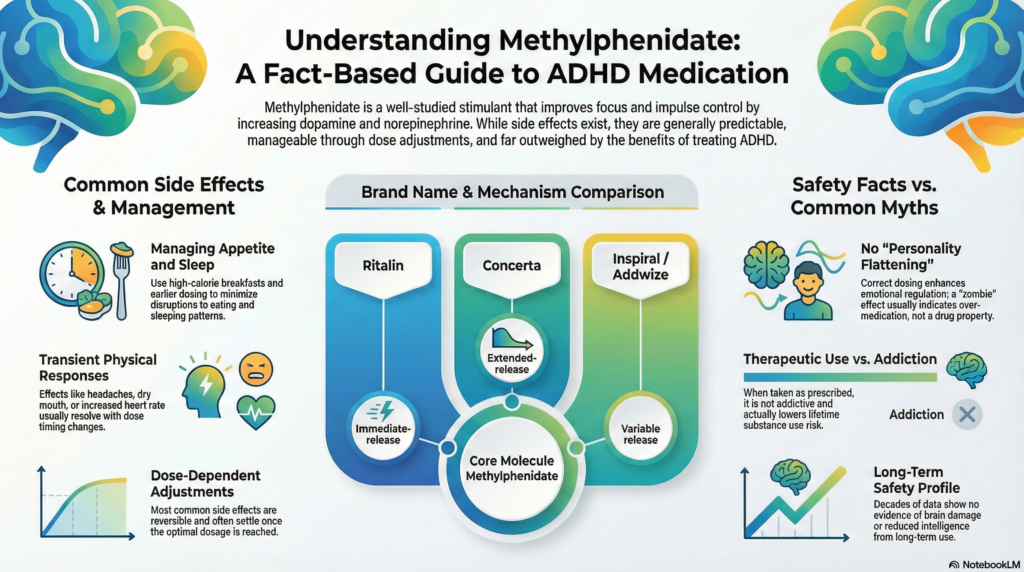 Methylphenidate is one of the most widely prescribed and well-studied medications for Attention-Deficit/Hyperactivity Disorder (ADHD) across children, adolescents, and adults. Despite its long history of use, concerns about side effects remain common—often fuelled by partial information or fear rather than evidence.
This FAQ addresses real, clinically relevant side effects of methylphenidate, with a clear focus on commonly used brand names.
What is methylphenidate?
Methylphenidate is a central nervous system stimulant used primarily to treat ADHD. It works by increasing dopamine and norepinephrine availability in the prefrontal cortex, improving attention, impulse control, working memory, and task persistence.
Common brand names
-
Ritalin (immediate-release)
-
Concerta (extended-release)
-
Inspiral
-
Addwize
-
Attentrol (selected markets)
Different brands vary mainly in release mechanism and duration, not in the core molecule.
What are the most common side effects of methylphenidate?
Most side effects are dose-dependent and reversible.
Common side effects
-
Reduced appetite
-
Mild weight loss
-
Difficulty falling asleep
-
Dry mouth
-
Headache
-
Mild nervousness or restlessness
-
Increased heart rate
These effects are usually transient and often resolve with dose adjustment or timing changes.
Does methylphenidate cause anxiety?
Methylphenidate can unmask or transiently increase anxiety, especially:
-
At higher doses
-
When titrated too rapidly
-
In individuals with underlying anxiety disorders
This does not mean methylphenidate is unsuitable. Often, anxiety settles once:
-
The dose is optimized
-
Long-acting formulations are used
-
Comorbid anxiety is addressed
Does methylphenidate affect sleep?
Yes, particularly if taken late in the day.
Sleep-related side effects include:
-
Delayed sleep onset
-
Reduced sleep duration (early phase)
Clinically, this is managed by:
-
Earlier dosing
-
Switching to extended-release preparations
-
Improving sleep hygiene
Notably, untreated ADHD itself disrupts sleep, and many patients sleep better once symptoms are controlled.
Does methylphenidate suppress appetite or affect weight?
Appetite suppression is common, especially:
-
During initial weeks
-
Around peak drug levels
Practical strategies include:
-
High-calorie breakfast before dosing
-
Nutrient-dense evening meals
-
Monitoring growth in children
Long-term studies show no significant impact on final adult height when appropriately monitored.
Can methylphenidate affect the heart?
Methylphenidate may cause small increases in heart rate and blood pressure.
In clinical practice:
-
Baseline cardiac history is reviewed
-
Blood pressure and pulse are monitored periodically
In individuals without known heart disease, methylphenidate is considered cardiovascularly safe when prescribed responsibly.
Can methylphenidate worsen tics?
Current evidence shows:
-
Methylphenidate does not consistently cause or worsen tics
-
In some patients, improved attention reduces tic severity indirectly
If tics appear, dose adjustment or formulation change is usually sufficient.
Is methylphenidate addictive?
When used as prescribed for ADHD, methylphenidate is not addictive.
Key distinction:
-
Therapeutic use improves self-regulation
-
Misuse (crushing, snorting, unsupervised use) carries risk
Appropriate treatment of ADHD is associated with a lower lifetime risk of substance use disorders.
Does methylphenidate change personality?
No.
When dosed correctly, methylphenidate:
-
Improves emotional regulation
-
Reduces impulsivity
-
Enhances consistency
Personality “flattening” usually signals over-medication, not a property of the drug itself.
Are long-term side effects common?
Methylphenidate has been used for decades, with robust long-term safety data.
There is no evidence that it:
-
Damages the brain
-
Reduces intelligence
-
Causes permanent emotional blunting
The greater risk lies in untreated ADHD, which affects academic, occupational, and emotional outcomes.
When should side effects prompt review?
Clinical review is advised if there is:
-
Persistent anxiety or irritability
-
Severe appetite loss
-
Emotional dulling
-
Poor symptom response despite adequate dosing
ADHD treatment is a precision process, not a one-dose-fits-all approach.
Is testing needed before starting methylphenidate?
A structured ADHD evaluation improves safety and outcomes. Depending on the case, this may include:
-
Clinical interview
-
Rating scales
-
Cognitive testing
-
Objective tools such as CPT or QEEG
These help distinguish ADHD from anxiety, depression, sleep disorders, or emotional dysregulation.
Key takeaway
Methylphenidate is one of the most effective and best-studied medications in psychiatry.
When diagnosis is accurate and treatment is individualized, side effects are:
-
Predictable
-
Manageable
-
Far outweighed by functional benefits
Fear usually reflects misinformation—not pharmacology.
About the Author
Dr. Srinivas Rajkumar T, MD (AIIMS), DNB, MBA (BITS Pilani)
Consultant Psychiatrist & Neurofeedback Specialist
Mind & Memory Clinic, Apollo Clinic Velachery (Opp. Phoenix Mall)
📞 +91-8595155808
✉ srinivasaiims@gmail.com